
Connected Respiratory Care Across the Continuum of Patient Management
The ZEPHYRx Respiratory Stack enables healthcare organizations to deliver connected respiratory care through integrated respiratory assessments, longitudinal patient insights, and workflows designed to support lung transplant programs and broader pulmonary care pathways.
From transplant evaluation through long-term follow-up, the Respiratory Stack connects patients, providers, and respiratory data to support more informed care decisions, improve visibility between visits, and enable scalable respiratory care delivery.
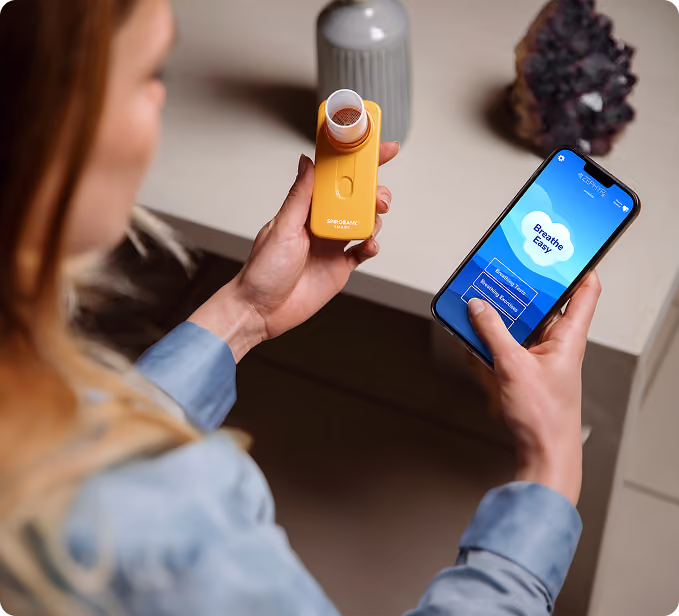
Lung transplant patients require ongoing respiratory assessment and multidisciplinary management throughout their care journey. The Respiratory Stack helps care teams collect consistent respiratory data and maintain visibility beyond traditional clinical encounters.

Support respiratory assessments and longitudinal data collection during transplant evaluation.

Enable connected respiratory assessments and patient engagement following transplantation.

Support ongoing respiratory data collection to help teams understand patient trends over time.

The Respiratory Stack connects respiratory data with clinical systems and care teams to support efficient, scalable respiratory care.

Connect respiratory assessments and patient insights with existing electronic medical record workflows.

Extend respiratory care beyond the clinic through connected assessments, patient engagement, and ongoing monitoring and care support.

Provide implementation guidance, training, and operational support to help healthcare organizations successfully deploy connected respiratory programs.
The Respiratory Stack supports healthcare organizations in building scalable respiratory programs through workflows designed to support reimbursable care models.


While lung transplantation represents a high-complexity application, the ZEPHYRx Respiratory Stack supports broader respiratory care pathways by connecting assessments, patient-reported data, and clinical workflows across healthcare settings.

Spirometry, peak flow, FeNO, oscillometry, and other respiratory measurements.

eCOA, ePROs, symptom assessments, and patient-reported data collection.

Longitudinal trends, data quality insights, and actionable visibility for care teams.
 Contact Us
IQVIA (NYSE:IQV) is a leading global provider of clinical research services, commercial insights and healthcare intelligence to the life sciences and healthcare industries and is dedicated to delivering actionable insights and accelerating innovations. Learn more at www.iqvia.com.
